Bishnupur Temples: The Hidden Terracotta Wonders of Bengal || Ritwika Pal
Bishnupur is located below the silent sky of Bankura, where time appears to be walking barefoot. On the surface, it seems to be a laid-back town. Take a closer look, and the walls start talking. Doubtlessly brick by brick, panel by panel, the terracotta temples of Bishnupur tell their stories, which have crossed centuries without raising their voices.
These are not monuments that dazzle you with their magnitude. They win you over with detail.
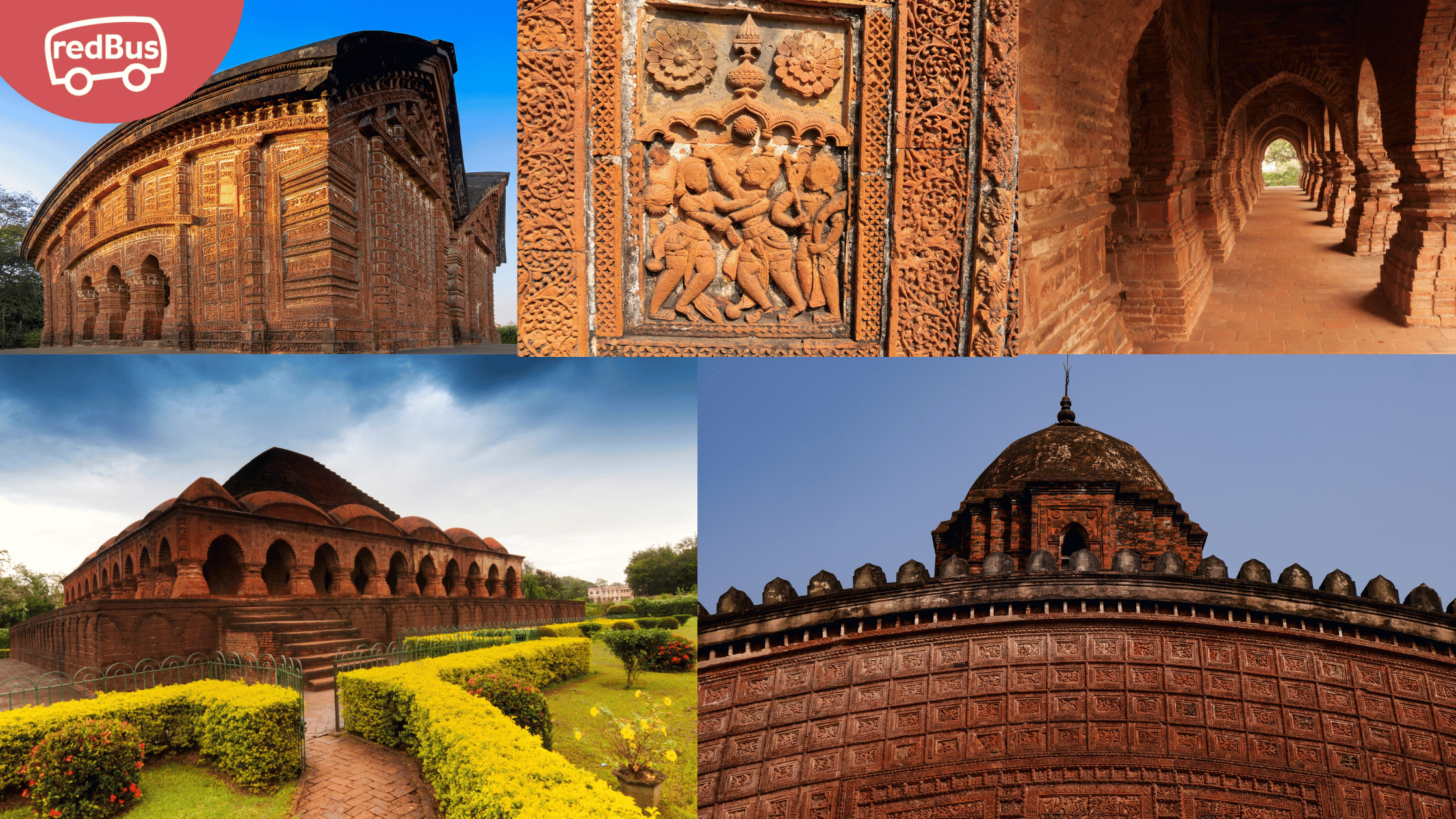
A Kingdom Written in Clay
The Malla kings ruled between the 17 th and 18 th centuries, leading to the prosperity of Bishnupur. With no stone in the area, the artisans resorted to what the land provided abundantly: laterite and clay. What has come out was a special language of architecture in which terracotta was not only the building but also the narrator.
All the walls of the temples are manuscripts. There are mythologies, everyday village existence, court procession, musicians, hunters, dancers, and gods coexisting on a baked earth, being frozen in mid-movement.
The Terra Miracle of Terracotta Panels
Bishnupur is really amazing in its terracotta relief work. These windows are unbelievably alive. You have Krishna lifting Govardhan, Durga riding her lion, scenes in the Ramayana and Mahabharata, and mixed with these, scenes of farmers tilling the land or women with their pots.
There is no hierarchy here. The sacred and the mundane are in the same place, as though to say that life is sacred.
The edges have been cushioned over time, but the expressions are still keen.
Architecture Poetry in Brick
Bishnupur temples are built with unique designs such as rekha deul, char-chala, at-chala, and ratna. The temples of Rasmancha, Jor Bangla, Madan Mohan, and Shyam Rai are all teachings on balance and proportion.
The Jor Bangla Temple is a kind of toy: the two typical village huts are put together in the shape of a union. It erases the distinction between home and heavenly refuge, making familiarity a worship.
More Than Temples
Bishnupur is not a place of architecture. It is also the birthplace of the Bishnupur Gharana of classical music, when dhrupad used to reverberate in the courts. These temples were also influenced by the same sensuousness that led to music. There is rhythm here in sound, in symmetry and repetition.
Visit Bishnupur, and you get the feeling that art used to be a way of life and not an independent affair.
Why Bishnupur Still Remains Concealed
Bishnupur is less famous and cultural as compared to the other heritage sites in Bengal, even though this place is culturally rich. It must be its best gift, perhaps. You have time to retreat, to make lines with your eyes, to allow silence to finish the tales that the walls initiate.
No velvet ropes. No rush. Just time, clay, and patience.
A Living Reminder
The terracotta temples of Bishnupur inform us that grandeur is not necessarily formed using marble or gold. At times, it comes out of the ground at our feet, and it is brought into form through the hands that thought that beauty ought to be a thing for all people.
Going to Bishnupur is not about seeing history.
Listening to it, one soft, sun-warmed brick, Waiting Till I find one who is willing To wait a little longer.


Comments
Post a Comment